Developing Independent Thinkers
For teachers, school leaders, parents and learners. Online in English or Afrikaans, Foundation Phase to Grade 12.
parents and Learners
learning | examination |
|---|---|
Your child spends hours learning and doesn't master the work? Your child knows the work but cannot recall during the exam? | Your child knows the work and regularly strikes a blank? Your child knows the work and still gets stuck in the exam? |
Learners scan, highlight and summarise, but fail to be able to answer analyse, synthesize and evaluate questions during the exam | Learners study and work through past papers, then a question looks different, their thinking stops without a plan to progress. |
Thinking Tools courses develop your child’s potential master knowledge, gain insight and solve problems using their figuring out skills to increase marks. What is learned is secured in neural pathways and stored in the long-term memory. | Thinking Tools courses develop your child’s ability to orientate themselves at the beginning of a question, complete the answer based on what they learned and figure out what to do next when a question is challenging. |
Thinking Tools courses for learners
teachers
TEACHING | examination |
|---|---|
As a teacher, you spend hours of your personal time planning and preparing lessons, often at the expense of your family time and other commitments. | Before exams, you do revision of challenging themes and provide them with extra work and extra classes to prepare them for the exam. |
Learners scan, highlight and summarise, but fail to be able to answer analyse, synthesize and evaluate questions during the exam | You organise mock examinations and help learners practise with past examination papers In the exam they still don't achieve the marks you expected. |
The Thinking Tools course helps you spend less time planning and preparing lessons while getting your learners’ brains into high gear, ready to think, understand and solve problems independently. | The Thinking Tools course empowers you to help your learners orientate themselves at the start of a question, use what they have learned to construct an answer, and independently figure out what to do next when they get stuck. |
Thinking Tools courses for teachers
Is this your school's exam strategy?
More revision, more extra classes and more past papers, yet the marks are still not what the effort deserves.
It is not a lack of knowledge; it is a lack of an important exam writing skill.
"It is more than knowing the work. It is skill what to do when the work one knows has stopped working."
Dr Cas Olivier, The Power of NEXT
There is another way: teach learners how to figure things out
Thinking Tools is a brain-based approach to teaching and learning. It works the same way learners naturally make meaning: comparing, connecting, contrasting, sorting, sequencing, and questioning outside and after school.
Instead of providing learners the subject content, the teacher becomes an architect of learning by enabling learners to figure out the subject content themselves.
This applies to all curricula and all subjects, what changes is who carries the thinking.
The habits our courses develop
01
Pause and get your bearings.
Before tackling a maths problem, writing an essay or approaching any learning task, learners first establish what is given, what they already know, and most importantly – additional insights that can be deduced. This unique Thinking Tools product keeps the nature, extent, and context of the challenge in suspension until the task is completed. We call this Step Zero — the starting point of independent thinking.
02
Engage in figure-out mode.
Learners actively use their natural Thinking Tools to analyse, synthesise and evaluate information. They distinguish facts from processes, compare and contrast, identify relationships, and sequence and organise ideas as they construct meaning and gain vision and clarity.
Their visible thinking becomes evidence of their learning and progress — in real time. Assessment, learning and remediation become part of the same continuous process.
03
Notice what is significant to earn more marks.
Learners develop the ability to detect what is significant to change the direction of their thinking that points towards a way forward, earning marks that would traditionally be lost. We call this Cue Spotting.
04
Discover new next moves and earn the marks.
Instead of giving up when they get stuck, learners regain Cognitive Mobility — the ability to find a way forward when familiar approaches no longer work. This helps learners tackle unfamiliar questions, avoid unnecessary mistakes and demonstrate more of what they know in assessments.
Learners move from "I need someone to explain it again" to "I know how to figure this out."
Choose your path
Thinking Tools for Schools
Give your staff a shared language for thinking across subjects and phases. Start with one small step: a pilot in one grade or subject, a staff development session, or observing a live Zoom mentorship session.
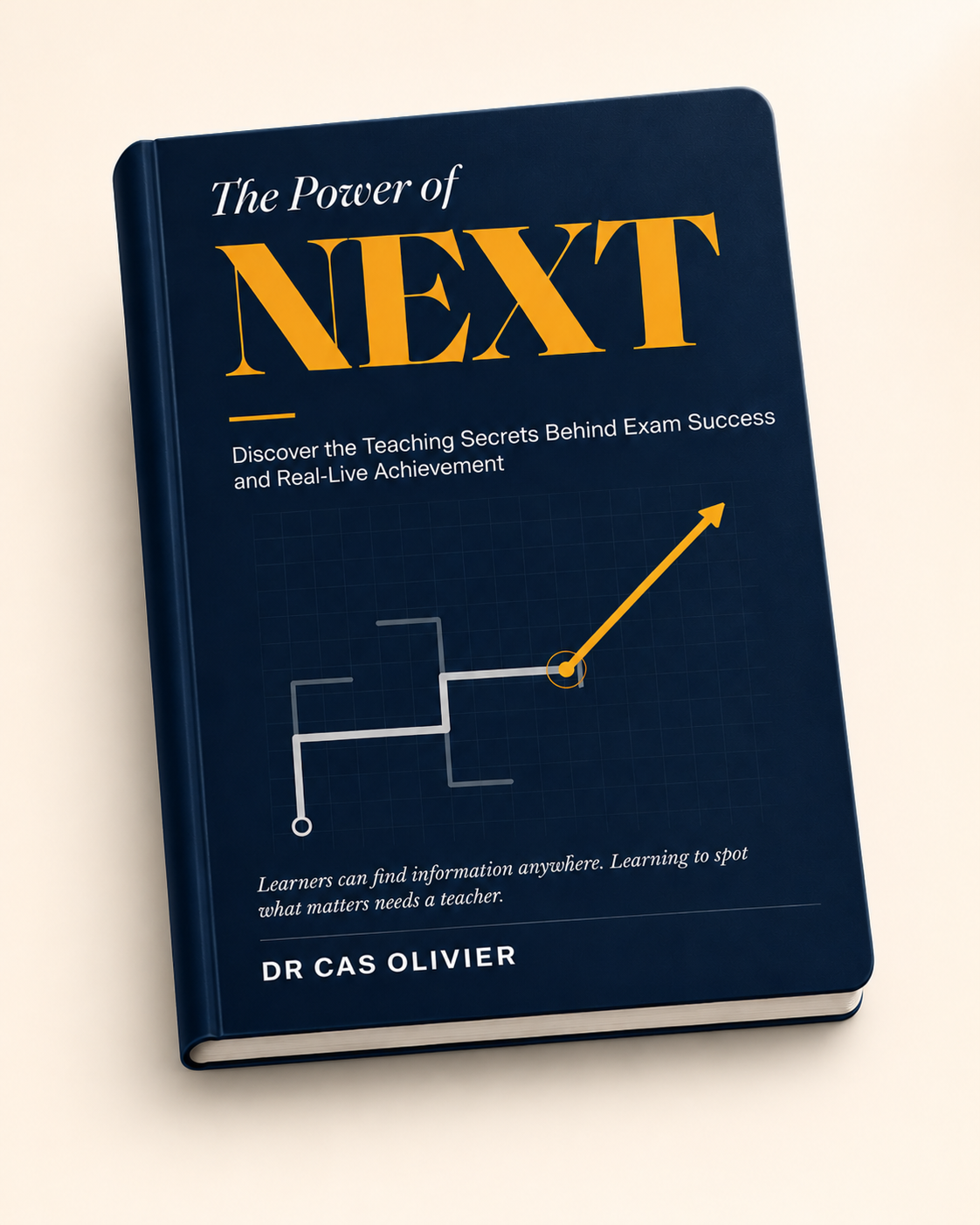
The Power of NEXT
by Dr Cas Olivier
The book that explains why learners who know the work still get stuck, and what teachers and schools can do about it.
Inside you will find:
- Why well-prepared learners get stuck in the examination.
- The difference between a cue and a clue, and why it matters how you help
- An examination preparation routine to improve marks.
- A five-minute Principal's Checklist for your school
Developed in classrooms, not in theory
STEM magazine
January 2025
Brain-based learning

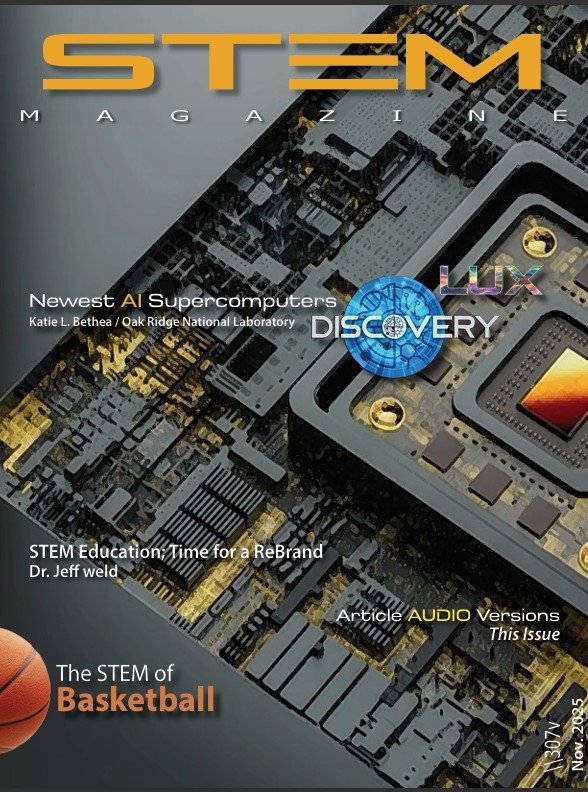
STEM magazine
November 2025
Step Zero
Step Zero has been part of our teaching and published work since the beginning. The Power of NEXT is our newest layer and is now being tested in our specialist teachers' classrooms. We share it as a report and an invitation to explore it with us.
Frequently asked questions
Thinking Tools are the natural thinking processes every learner already has, such as comparing, categorising, sequencing and connecting. Our courses teach teachers and learners to use them deliberately so that understanding forms, lasts and
transfers to new problems.
No. Extra lessons usually re-explain content. Thinking Tools develops the learner's ability to organise their own thinking, so they depend less on explanation.
That is exactly the problem our approach addresses. Freezing is often about not knowing where to begin or what to do when the method stops working, rather than missing knowledge. We cannot promise specific marks; we develop the capability
that helps learners keep moving.
It is not an add-on. It changes how you use the lessons you already teach, so that learners do more of the thinking and you do less re-teaching.
Courses are offered online in English or Afrikaans, from Foundation Phase to Grade 12.
Yes. The Power of NEXT may be freely copied and shared in whole for personal, educational and non-commercial use.
From the blog

The future will not always supply the next step. Let's develop learners who can find it.
Talk to us: WhatsApp +27 83 259 2857 | cas@learningdesigns.co.za
GET IN TOUCH
VISIT US ON SOCIAL MEDIA
Join Thinking Tools for creative accelerated learning (English group)
Join Thinking Tools for creative accelerated learning (Afrikaans group)

Thinking Tools | Building a thinking culture in every home, school and community.
©2026 LearningDesigns. All Rights Reserved